
Top 35 Effective Tools for Health News Success
In the digital age, health news is one of the most consumed yet scrutinized forms of content. Whether you are a medical journalist, a wellness blogger, or a healthcare PR professional, your success depends on a delicate balance of speed, accuracy, and search engine visibility. Because health information falls under Google’s “Your Money or Your Life” (YMYL) category, the standards for quality and E-E-A-T (Experience, Expertise, Authoritativeness, and Trustworthiness) are incredibly high.
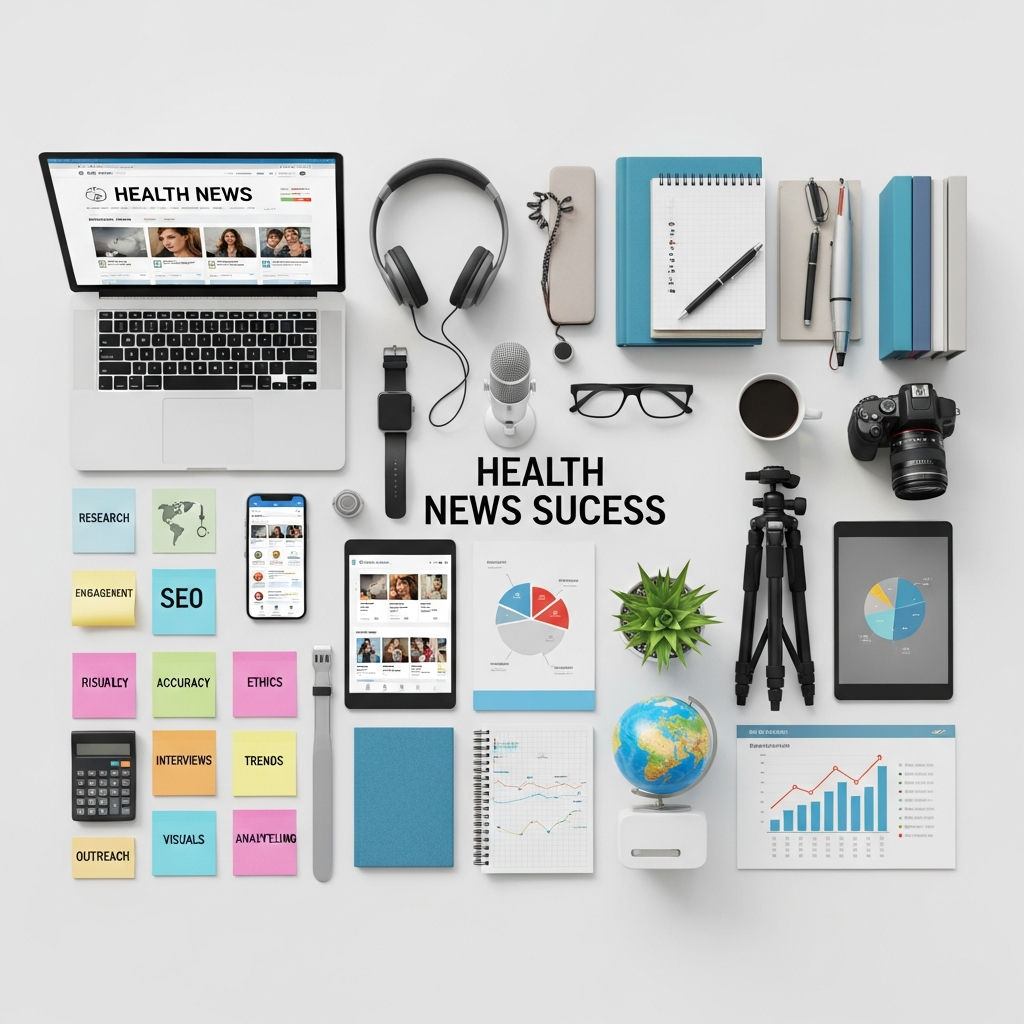
To navigate this competitive landscape, you need more than just a passion for wellness; you need a sophisticated tech stack. Below are 35 effective tools categorized to help you achieve health news success, from finding breaking research to optimizing for SEO.
Research and Medical Literature Tools
The foundation of any credible health news story is peer-reviewed data. These tools help you access the latest scientific breakthroughs before they hit the mainstream.
- PubMed: The gold standard for medical research. It provides access to over 35 million citations for biomedical literature from MEDLINE, life science journals, and online books.
- Google Scholar: A powerful search engine for scholarly literature across many disciplines and sources, including theses, books, and abstracts.
- The Cochrane Library: Essential for high-quality, independent evidence to inform healthcare decision-making through systematic reviews.
- ClinicalTrials.gov: A database of privately and publicly funded clinical studies conducted around the world. Perfect for spotting upcoming medical trends.
- ResearchGate: A social networking site for scientists and researchers to share papers, ask and answer questions, and find collaborators.
- Retraction Watch: A crucial tool for health journalists to ensure the study they are citing hasn’t been pulled for errors or fraud.
- The Lancet / NEJM Apps: Stay updated with the latest from the world’s leading medical journals via their dedicated mobile alerts.
Content Ideation and Trend Tracking
In health news, timing is everything. These tools help you identify what the public is searching for right now.
- Google Trends: Analyze the popularity of top search queries in Google Search across various regions and languages.
- BuzzSumo: Find the most shared health content on social media to understand what topics are resonating with audiences.
- AnswerThePublic: This tool visualizes search questions and suggested autocomplete searches, helping you address specific patient concerns.
- Exploding Topics: Identifies rapidly growing trends before they peak, giving you a first-mover advantage in health reporting.
- Feedly: An AI-powered news aggregator that allows you to follow medical journals, health blogs, and news outlets in one place.
SEO and Keyword Research Tools
To ensure your health news reaches its intended audience, it must rank on search engines. These tools help you master healthcare SEO.
- Ahrefs: An all-in-one SEO toolset that is excellent for keyword research, backlink analysis, and checking what competitors are ranking for.
- SEMrush: Vital for tracking your “Health” niche keywords and performing technical SEO audits on your website.
- Yoast SEO: A WordPress plugin that guides you in optimizing your health articles for readability and keyword density.
- Surfer SEO: Uses AI to analyze top-ranking pages and provides a blueprint for how many words, images, and headers your health article needs.
- Google Search Console: Essential for monitoring your site’s performance in Google Search and identifying which health queries bring users to your site.
Writing, Editing, and Fact-Checking
Accuracy is non-negotiable in health news. One wrong recommendation can have real-world consequences.
- Grammarly: Beyond basic spellcheck, Grammarly helps maintain a professional tone and ensures your medical terminology is used correctly.
- Hemingway Editor: Health news can become overly dense with jargon. This tool helps simplify your writing for a general audience.
- FactCheck.org (SciCheck): A dedicated resource that focuses exclusively on false or misleading scientific claims.
- Health News Review: While they have slowed down updates, their archives provide an excellent “toolkit” for evaluating the claims of health news stories.
- Medical Terminology Apps: Tools like Taber’s Medical Dictionary are essential for verifying complex definitions on the fly.
Visual Content and Data Visualization
Complex medical data is often better explained through visuals. These tools help you create engaging infographics and diagrams.
- BioRender: Often called the “Canva for science,” it allows you to create professional-looking biological diagrams and medical illustrations.
- Canva: Perfect for creating social media graphics, featured images, and simple health infographics.
- Infogram: An easy-to-use tool for turning complex health statistics into interactive charts and maps.
- Piktochart: Another robust tool for creating detailed posters and reports on healthcare data.
- Adobe Express: Useful for quick video edits or high-quality visuals for health news stories.
Distribution and Social Media Management
Once your news is published, you need to get it in front of readers, doctors, and influencers.
- Buffer: Schedule your health news updates across Twitter, LinkedIn, and Facebook to maintain a consistent presence.
- Mailchimp: Build a health newsletter to keep your readers engaged with weekly digests and breaking news alerts.
- HootSuite: Monitor mentions of specific health topics or your brand across various social platforms.
- Substack: An increasingly popular platform for health experts to build a direct, paid relationship with their audience through long-form news.
Productivity and Organization
Managing a health news desk or a busy blog requires streamlined workflows.
- Trello: A visual tool for managing your editorial calendar and tracking the progress of various health stories.
- Notion: An all-in-one workspace where you can store research notes, interview transcripts, and draft your health articles.
- Slack: For real-time communication between writers, medical reviewers, and editors.
- Otter.ai: An AI transcription tool that is invaluable for transcribing interviews with doctors or medical experts quickly and accurately.
- Pocket: Save interesting health studies or articles you find throughout the day to read and reference later.
Conclusion: The Secret to Health News Success
Success in the health news sector is defined by more than just traffic; it is defined by the impact and accuracy of the information provided. While these 35 tools offer a significant advantage in terms of research, SEO, and distribution, the “human element” remains the most important factor. Always ensure that your content is reviewed by medical professionals and that you are transparent about your sources.
By combining these cutting-edge tools with a commitment to scientific integrity, you can build a health news platform that not only ranks high on Google but also earns the lasting trust of your audience. Start by integrating one or two of these tools into your daily workflow and watch your health news authority grow.